_689c0cefa9df780cd1037583.jpeg)
Commercial Epoxy Flooring Solutions for Louisville Businesses: What You Need to Know
Commercial spaces in Louisville take a beating. Between foot traffic, equipment, spills, and daily wear, the floor underneath a business does more work than almost any other surface in the building — and most standard flooring options were never built for that kind of punishment. Epoxy flooring has become the go-to solution for Louisville business owners who need a surface that can keep up.What makes epoxy different from other commercial flooringEpoxy is not a coating applied on top of concrete — it bonds chemically to the slab, creating a surface that becomes part of the floor itself. This is why epoxy holds up under conditions that would peel, crack, or stain other materials. It resists oil, chemicals, moisture, and impact in a way that paint or sealant simply cannot. For warehouses, auto shops, restaurants, medical offices, and retail spaces, that durability is not a luxury — it is a practical requirement.The finish also matters for commercial settings. Epoxy comes in a range of textures and finishes, from high-gloss surfaces that reflect light and brighten a space, to slip-resistant options designed for areas where spills are common. Louisville businesses have the flexibility to choose a finish that fits both their operational needs and how they want the space to look.What the installation process looks likeProper epoxy installation starts with surface preparation. The concrete has to be clean, dry, and free of any previous coatings, oils, or damage before the epoxy can bond correctly. Skipping this step is the most common reason epoxy floors fail prematurely. A professional installer will grind or shot-blast the surface, repair any cracks or spalling, and ensure the slab is ready before a single drop of epoxy goes down.Most commercial epoxy jobs in Louisville can be completed in one to three days depending on the size of the space and the number of coats required. The floor needs to cure before it can be used, typically 24 to 72 hours for light foot traffic and longer for heavy equipment. Planning around this downtime is part of the project conversation any reputable installer will have upfront.What to look for when choosing an installerNot all epoxy products are the same, and not all installers have the same level of experience. The thickness of the epoxy system, the quality of the base materials, and the care taken during surface prep all determine how long the floor will last and how it will perform under real conditions. A floor installed with cut-rate materials or poor prep will fail within a few years. A properly installed commercial epoxy floor in Louisville should last a decade or more with basic maintenance.Ask any installer about their surface preparation process, the specific products they use, and whether they can provide references from commercial jobs similar to yours. The answers will tell you quickly whether you are talking to someone who knows the work.Frequently Asked QuestionsHow long does a commercial epoxy floor last in a Louisville business? A properly installed epoxy floor can last 10 to 20 years in most commercial environments with routine cleaning and occasional maintenance.Can epoxy be installed over existing concrete without grinding? No. The surface must be mechanically prepared for the epoxy to bond correctly. Any installer who skips this step is cutting corners that will cost you later.Is epoxy flooring safe for food service environments? Yes. Epoxy is non-porous, easy to sanitize, and can be installed with slip-resistant additives, making it well-suited for kitchens and food prep areas.How much does commercial epoxy flooring cost in Louisville? Pricing varies based on square footage, surface condition, and the type of epoxy system used. Most commercial projects fall between $3 and $10 per square foot installed. Contact a local installer for an accurate estimate based on your specific space.
Posted on Aug 13, 2025
Know Details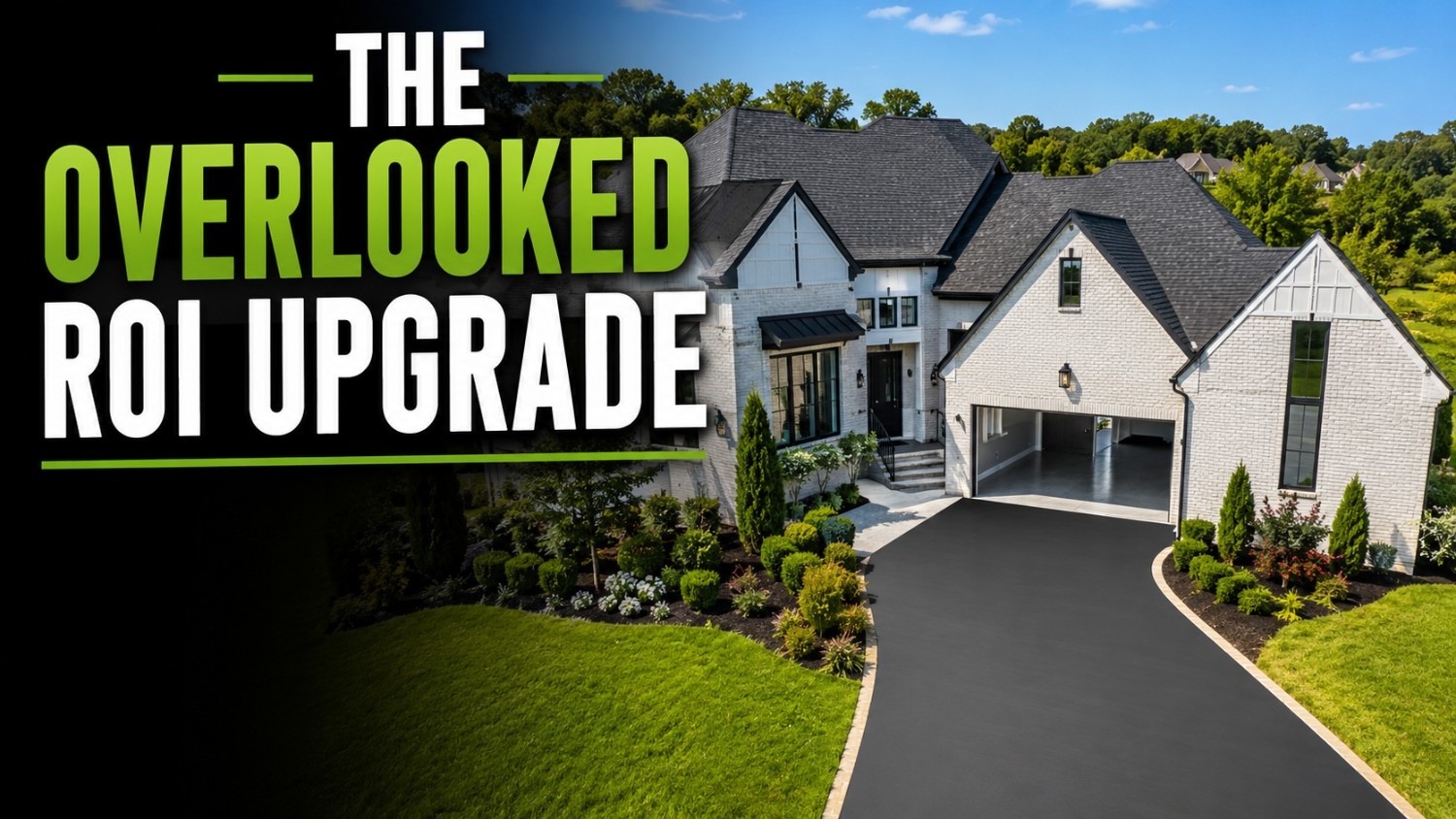
2026 Louisville Home Improvement Trend: Outdoor Surfaces That Actually Increase Property Value
Louisville homeowners have always invested in their properties, but the projects getting attention in 2026 are different from what drove renovation spending a decade ago. Interior updates still matter, but buyers and appraisers are increasingly focused on what they see before they ever walk through the front door. Outdoor surfaces — driveways, walkways, patios, and garage floors — have moved from afterthought to selling point.Why curb appeal carries more weight than it used toThe first impression a property makes shapes everything that follows. Real estate agents in Louisville consistently report that homes with clean, well-maintained exterior surfaces generate more interest and hold their asking price better than comparable homes where the outside has been neglected. A cracked, stained driveway signals deferred maintenance to a buyer, even when the interior is in excellent condition. That perception has a real effect on offers.Beyond buyer psychology, outdoor surface improvements have started showing measurable returns in appraisals. A freshly sealed or resurfaced driveway, a clean concrete patio, or a professionally coated garage floor are no longer invisible to an appraiser the way they were in the past. These are finished surfaces that require investment to do correctly, and that investment is increasingly reflected in property values.Which outdoor surfaces are delivering the most value in LouisvilleDriveway sealing and resurfacing are consistently at the top of the list for Louisville homeowners looking for return on investment. A properly sealed asphalt or concrete driveway extends the life of the surface, improves appearance, and signals to buyers that the property has been maintained. The cost is modest relative to other home improvements, and the visual impact is immediate.Epoxy-coated garage floors have become a notable trend in Louisville's residential market. A finished garage floor transforms what is typically a utilitarian space into something that adds to the home's overall presentation. For buyers who use garages for more than parking — as workshops, home gyms, or additional storage — a clean, coated floor is a genuine feature, not just a cosmetic upgrade.Concrete patios and walkways that have been cleaned, repaired, and sealed round out the category of outdoor improvements that consistently move the needle. These surfaces connect the home to the yard and frame the outdoor living space. When they are in good condition, they extend the feel of a well-cared-for home. When they are cracked and stained, they undercut everything else.What Louisville homeowners should prioritize this yearThe outdoor surface projects that deliver value share a common trait: they address visible deterioration and restore the surface to a condition that looks intentional and maintained. Crack repair followed by sealing, professional cleaning before a coating application, and selecting products appropriate for Louisville's climate — where freeze-thaw cycles put real stress on outdoor surfaces — are all part of doing the work correctly rather than just quickly.Homeowners planning to list in the next one to three years should treat outdoor surface improvement as part of their pre-sale preparation, not as a last-minute cosmetic fix. The difference between a surface done well and a surface done at the last minute is visible, and buyers notice.Frequently Asked QuestionsDoes sealing a driveway actually add value to a Louisville home? Yes. A sealed driveway improves appearance, extends the life of the surface, and signals maintenance to buyers and appraisers — all of which support property value.What outdoor surface project has the best return on investment? Driveway sealing and resurfacing typically offer strong return relative to cost. Garage floor coatings are also increasingly valued by buyers, particularly in Louisville's competitive housing market.How does Louisville's weather affect outdoor concrete and asphalt? Louisville's freeze-thaw cycles cause water that penetrates cracks to expand and contract, accelerating surface deterioration. Sealing surfaces regularly prevents this moisture intrusion and significantly extends their lifespan.When should I do outdoor surface work before listing my home? At least 60 to 90 days before listing, so the work is fully cured, any touch-ups are completed, and the surfaces have time to look settled rather than freshly rushed.
Posted on Jun 29, 2026
Know Details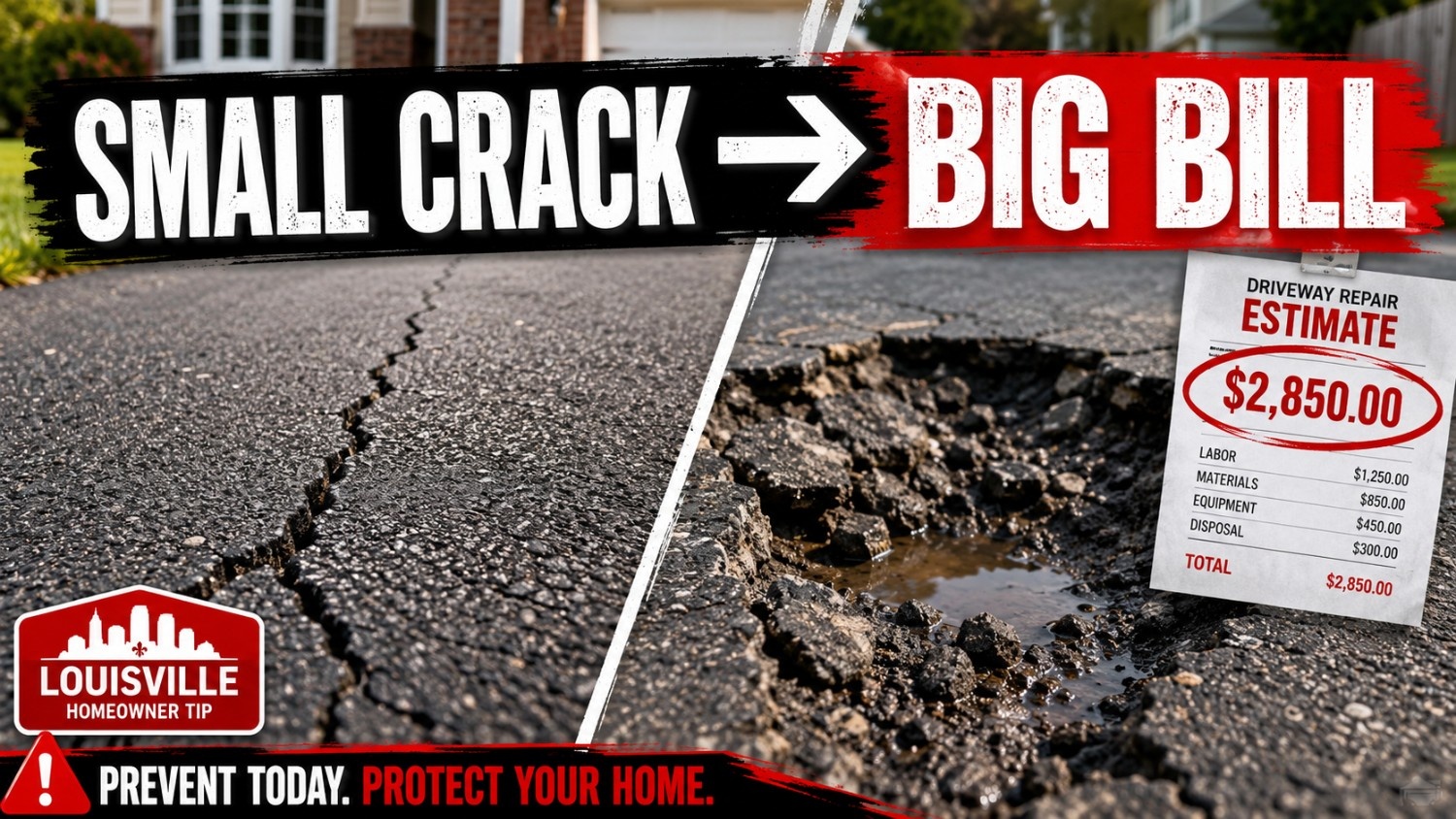
The Hidden Cost of Ignoring Small Driveway Cracks
A small crack in a driveway is easy to dismiss. It is not a safety hazard, it does not affect how the driveway functions day to day, and fixing it feels like a low-priority task compared to everything else competing for a homeowner's attention and budget. But small cracks in concrete and asphalt driveways do not stay small — and what starts as a minor surface issue has a predictable pattern of becoming a significantly more expensive one.How a small crack becomes a large problemWater is the main driver of driveway deterioration, and cracks are how water gets in. Once moisture penetrates the surface, it works its way into the base material beneath. In Louisville's climate, where temperatures regularly swing above and below freezing in the same season, that trapped water expands when it freezes and contracts when it thaws. Each cycle widens the crack slightly. Over a few winters, what began as a hairline fracture becomes a gap wide enough to catch a heel or a bike tire, and the edges of that gap start to crumble.The problem compounds because cracks rarely appear in isolation. As the base material shifts and settles from moisture intrusion, stress concentrates at other points in the surface and new cracks form. A driveway that had one small crack in the spring can have a network of damage by the following year if the original crack was not addressed.The real cost comparisonFilling a small driveway crack is a straightforward and inexpensive repair. Professional crack filling in Louisville typically costs between $100 and $300 depending on the number and size of cracks, and a quality sealant applied afterward extends the life of the repair considerably. This is the cost of addressing the problem while it is still small.The cost of waiting looks entirely different. A driveway that has deteriorated to the point of widespread cracking, crumbling edges, or heaving sections typically requires either extensive patching — which is never invisible — or full replacement. Driveway replacement in Louisville runs between $4,000 and $15,000 or more depending on size and material. That is not a repair cost. That is a major home improvement project that could have been deferred for many more years with basic maintenance.What proper crack maintenance actually involvesAddressing driveway cracks correctly means cleaning the crack thoroughly to remove debris and vegetation, applying a flexible filler appropriate for the crack width and the driveway material, and sealing the surrounding surface to prevent new moisture intrusion. Doing only part of this process — filling without sealing, or sealing without proper prep — produces results that fail quickly and leave the homeowner back where they started.Louisville homeowners should inspect their driveways every spring after the freeze-thaw season and address any new cracking before the next winter. An annual or biennial sealing schedule keeps the surface protected and significantly extends the time before any major repair or replacement becomes necessary.Frequently Asked QuestionsHow long can I wait to fix a small driveway crack? The sooner the better. Small cracks are cheapest to repair and easiest to seal. Waiting even one winter can allow freeze-thaw damage to significantly expand the crack.Will crack filler make my driveway look like new? Crack filler addresses the structural issue but will typically remain visible on the surface. A full seal coat applied after filling blends the repair and restores a more uniform appearance.How often should a Louisville driveway be sealed? Most asphalt driveways benefit from sealing every two to three years. Concrete driveways generally need sealing every three to five years. Driveways with existing cracks should be sealed more frequently.Is it worth repairing an older driveway or should I just replace it? If the surface has scattered cracks but the base is still sound, repair and sealing is almost always the better value. Replacement makes sense when the base has failed or the surface damage is too widespread to address economically.
Posted on Jun 29, 2026
Know Details
Garage Epoxy Floors Are Taking Over Louisville — Here's Why Homeowners Are Obsessed
Walk into almost any recently renovated garage in Louisville and there is a good chance the floor is coated. Garage epoxy floors have gone from a niche upgrade to something homeowners across the city are actively seeking out — and the reasons are not hard to understand once you see a finished project in person.What epoxy does for a garage floorA standard concrete garage floor is porous, which means it absorbs everything that lands on it. Oil drips from vehicles, road salt tracked in during winter, and general grime all work their way into the surface and create stains that cannot be cleaned out. Over time, the floor also starts to dust — breaking down at the surface and leaving a fine gray powder that spreads through the garage and into the house.Epoxy seals the concrete completely. The coated surface is non-porous, which means spills sit on top rather than soaking in. Oil wipes up. Road salt rinses off. The floor stops dusting. For homeowners who have struggled to keep a garage floor clean, the difference is immediate and dramatic. Many describe cleaning their epoxy floor as the easiest cleaning task in the house — a quick sweep and a mop with water handles almost anything.Why Louisville homeowners are choosing epoxy nowPart of what is driving the trend is a shift in how garages are being used. More Louisville homeowners are using their garages as workshops, home gyms, hobby spaces, or finished storage areas rather than simply a place to park. When a garage serves multiple purposes, the floor matters in a way it never did when the space was purely utilitarian. A clean, finished epoxy floor makes the space feel intentional and usable. An unfinished concrete floor makes it feel temporary.The aesthetic options have also expanded considerably. Modern garage epoxy systems include decorative chip blends — small colored flakes broadcast into the epoxy as it cures — that create a finished look closer to a polished floor than an industrial coating. Louisville homeowners can choose from a wide range of color combinations that complement the home rather than just defaulting to gray.What the installation process involvesA garage epoxy floor is not a weekend DIY project if longevity is the goal. The concrete must be mechanically ground before the epoxy is applied — this opens the surface of the slab so the epoxy can bond at the molecular level rather than just sitting on top. Without proper prep, the coating will peel. Professional installers in Louisville have the equipment and experience to do this correctly, and the results are significantly more durable than roll-on consumer products.A full epoxy system — primer, base coat, decorative chips if desired, and a topcoat — typically takes one to two days to apply and requires 24 to 72 hours of cure time before vehicles can be driven back in. Most homeowners find the short disruption well worth the outcome.Frequently Asked QuestionsHow long does a garage epoxy floor last? A professionally installed garage epoxy floor in Louisville typically lasts 10 to 20 years with basic maintenance. Consumer-grade products applied without proper surface prep may last only a few years.Can epoxy be applied over a painted garage floor? Not without removing the existing paint first. Any existing coating must be ground off before the epoxy can bond correctly to the concrete.Is epoxy slippery when wet? A standard epoxy topcoat can be slippery when wet. Most professional installers offer an anti-slip additive that provides traction without significantly affecting appearance — recommended for any garage used as a workspace or gym.How much does a garage epoxy floor cost in Louisville? Most single-car garages run between $800 and $1,500 professionally installed. Two and three-car garages typically fall between $1,500 and $3,500 depending on condition and the epoxy system selected.
Posted on Jun 29, 2026
Know Details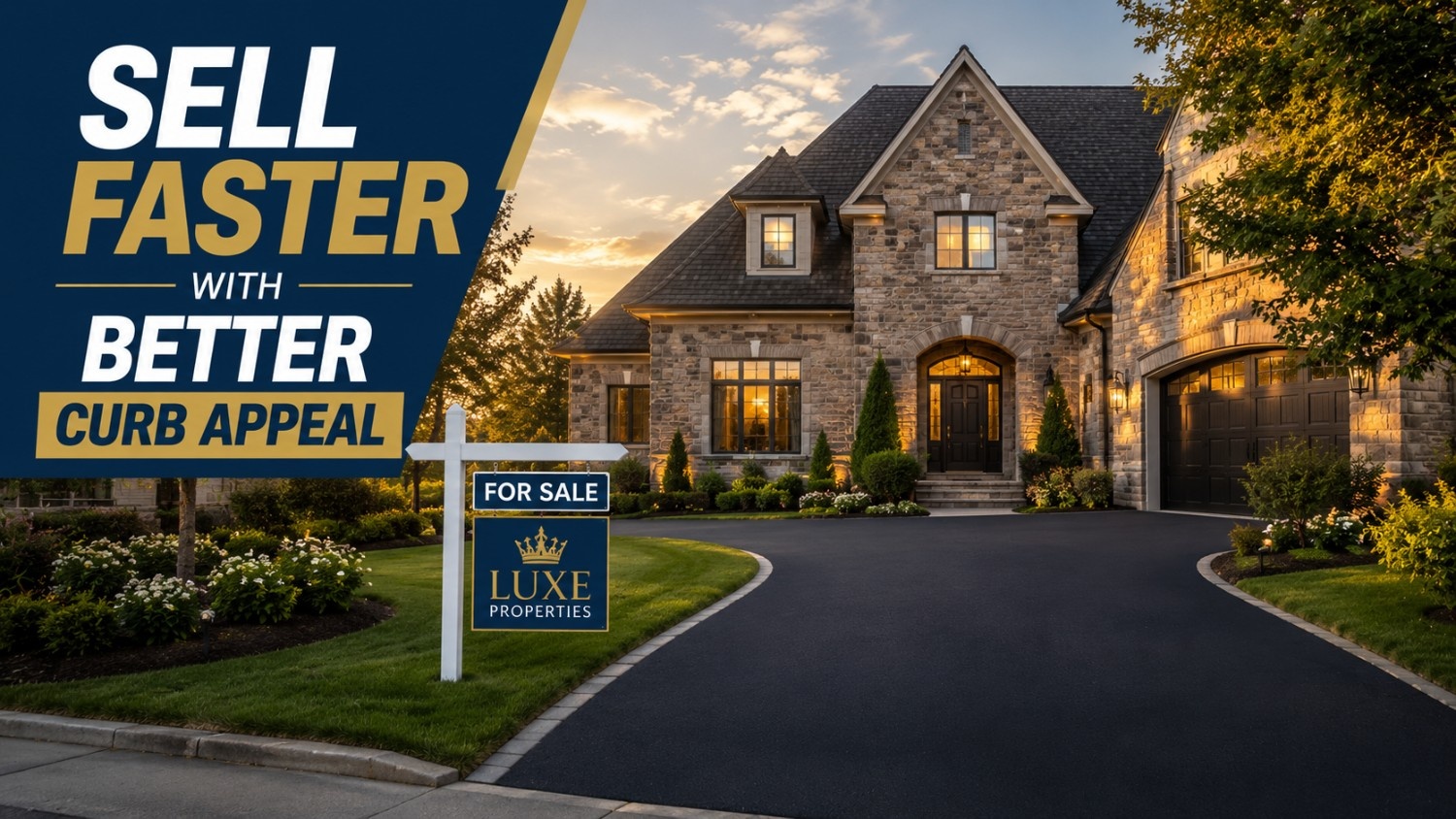
Why Louisville Realtors Love Freshly Sealed Driveways Before Listing a Home
Real estate agents who work Louisville's residential market have a consistent piece of advice for sellers preparing to list: take care of the driveway. It sounds like a minor detail compared to updating a kitchen or staging the living room, but agents who have watched enough homes sell understand something that the data consistently confirms — the condition of the driveway shapes a buyer's first impression before they have even stepped out of the car.The psychology of the first impressionBuyers form opinions about a home within seconds of arriving. A cracked, faded, or stained driveway does not just look bad on its own — it creates a mental frame that the buyer carries through the entire showing. If the outside looks neglected, the instinct is to look harder for other problems once inside. A clean, freshly sealed driveway does the opposite. It signals that the home has been maintained, which makes buyers more willing to trust what they see and less inclined to negotiate aggressively on price.Louisville realtors consistently report that homes with strong curb appeal spend less time on market. Driveway condition is one of the most visible contributors to that first impression because it is literally the path from the street to the front door. Every buyer walks across it.What sealing does for a driveway's appearanceAn asphalt driveway that has not been sealed in several years will have a faded, gray appearance with visible cracking and surface oxidation. Freshly sealed asphalt is uniformly dark, which reads as new or recently maintained — a significant visual upgrade for a fraction of the cost of replacement. Concrete driveways benefit similarly from a clean seal coat, which restores a consistent appearance and eliminates the weathered look that develops over time.Sealing also fills minor surface cracks before they become talking points during a showing or, worse, items on an inspection report. A buyer or inspector who sees a network of cracks in the driveway will note it. A sealed surface that has had cracks filled and then coated presents cleanly and does not invite that conversation.The return on investment caseDriveway sealing is one of the most cost-effective pre-listing improvements a Louisville homeowner can make. Professional sealing of a standard residential driveway typically runs between $150 and $400 — a small number relative to listing price, closing costs, or virtually any interior renovation. The visual return on that investment is disproportionately large because the driveway is one of the highest-visibility surfaces on the property.Agents often recommend combining driveway sealing with other exterior clean-up tasks — power washing walkways and the home's exterior, cleaning gutters, fresh mulch in beds — as part of a coordinated curb appeal push in the two to four weeks before a home goes live on the market. When all of these elements come together, the home photographs better, shows better, and commands more confidence from buyers.Frequently Asked QuestionsHow soon before listing should I have my driveway sealed? Ideally two to four weeks before listing. This gives the sealant time to fully cure, allows any scuff marks from curing to disappear, and ensures the surface looks settled and clean in listing photos.Does a sealed driveway actually affect the sale price? Directly measuring the impact is difficult, but Louisville realtors consistently report that strong curb appeal — of which the driveway is a major component — supports asking price and reduces time on market. The investment is low enough that the question is rarely whether it is worth it.Should I repair cracks before sealing? Yes. Cracks should be filled and allowed to cure before the seal coat is applied. Sealing over unfilled cracks will not hide them effectively and the cracks will reappear as the sealant settles.What if my driveway is in poor condition — is sealing still worth it? Sealing can improve the appearance of a worn driveway, but it cannot fix structural damage or significant deterioration. If the driveway has widespread cracking or base failure, replacement may be a more honest investment before listing.
Posted on Jun 29, 2026
Know Details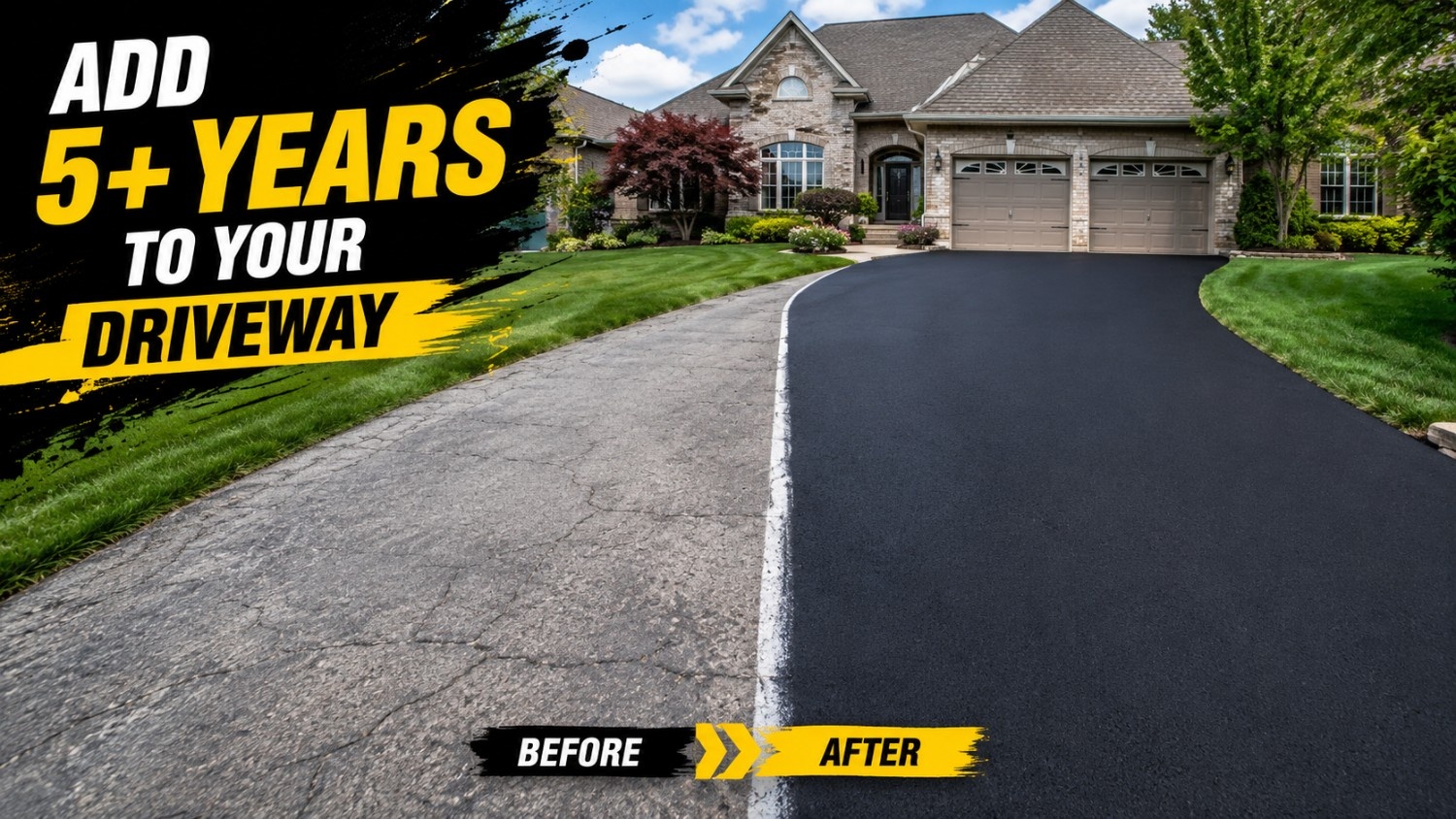
Your Louisville Driveway Is Aging Faster Than You Think (Here's How to Add 5+ Years to Its Life)
Most Louisville homeowners do not think about their driveway until something goes visibly wrong — a crack wide enough to trip on, a surface crumbling at the edges, or a stain that will not come clean no matter what. By that point, the damage has typically been building for years. Driveways age in ways that are easy to overlook until the deterioration crosses a threshold that demands attention, and Louisville's climate accelerates that process more than most homeowners realize.Why Louisville driveways age faster than averageLouisville sits in a climate zone that delivers the worst of multiple worlds for paved surfaces. The city averages more than 60 freeze-thaw cycles per year — days where temperatures cross the freezing point in both directions. Each cycle drives moisture deeper into surface cracks and expands it as it freezes, widening the crack a little more each time. Add in the region's significant rainfall, occasional ice storms, and summer heat that causes asphalt to soften and shift, and Louisville driveways face year-round stress that compounds quickly without maintenance.UV exposure contributes significantly as well. The oils that keep asphalt flexible and bound together oxidize under sunlight over time, leaving the surface brittle and prone to surface cracking. A driveway installed ten years ago in Louisville without any sealing in between has likely lost a meaningful portion of its original structural integrity — even if it still looks passable from a distance.The maintenance steps that actually extend driveway lifeSealing is the single highest-impact maintenance task for both asphalt and concrete driveways. For asphalt, a quality sealcoat replenishes surface oils, blocks UV penetration, and creates a barrier against moisture intrusion. Applied every two to three years, it dramatically slows the oxidation and brittleness that leads to cracking. For concrete, sealing prevents moisture from reaching the subsurface and protects against the salt damage that Louisville winters bring when roads and driveways are treated for ice.Crack filling before sealing is equally important. Sealing over unfilled cracks does not address the underlying damage — it simply covers it temporarily while water continues to penetrate underneath. The correct sequence is always crack repair first, followed by sealing once the filler has cured. Skipping this step wastes money on the seal coat and delays a problem that will resurface within a season.What a proper maintenance schedule looks likeA Louisville driveway on a consistent maintenance schedule should be inspected each spring after the freeze-thaw season ends. Any new cracking should be filled and allowed to cure. The surface should be cleaned of oil stains, debris, and vegetation growing in cracks before any product is applied. Sealing should follow on the appropriate cycle for the driveway material.Homeowners who follow this schedule consistently report that their driveways remain in serviceable, attractive condition significantly longer than those who address issues only when they become urgent. The math is straightforward: a driveway that costs $250 to seal every three years is a driveway that may not need a $10,000 replacement for 20 or more years. One that receives no maintenance may need replacement in half that time.Signs your driveway needs attention nowSurface fading and graying on asphalt, hairline cracking across the surface, small cracks near edges and expansion joints, and minor crumbling at the driveway border are all early-stage signs that are inexpensive to address. Alligator cracking — a pattern of interconnected cracks resembling scales — indicates base layer damage that is more serious and more expensive to repair. Catching deterioration at the early stage is the entire value proposition of routine maintenance.If your Louisville driveway has not been sealed in more than three years, has visible cracking that has not been filled, or shows surface fading and brittleness, it is already aging faster than it should. The window to extend its life significantly with low-cost maintenance is open — but it does not stay open indefinitely.Frequently Asked QuestionsHow do I know if my driveway can be saved with maintenance or needs replacement? If the base layer is still intact and damage is limited to surface cracking and oxidation, maintenance and sealing can extend the driveway's life significantly. Widespread alligator cracking, sinking sections, or base failure typically indicate replacement is the better path.What is the best time of year to seal a Louisville driveway? Late spring through early fall, when temperatures are consistently above 50°F and no rain is expected for 24 to 48 hours after application. Avoid sealing in summer's peak heat, which can cause the sealant to dry too quickly and streak.Can I seal my driveway myself or should I hire a professional? DIY sealing products are available, but professional-grade materials are significantly more durable and the application process — proper prep, correct product selection, even application — makes a meaningful difference in how long the result lasts.How much does professional driveway maintenance cost in Louisville? Crack filling typically runs $100 to $300. Professional sealing for a standard residential driveway runs $150 to $400. Both together represent a small fraction of what driveway replacement costs and can defer that expense by many years.
Posted on Jun 29, 2026
Know Details